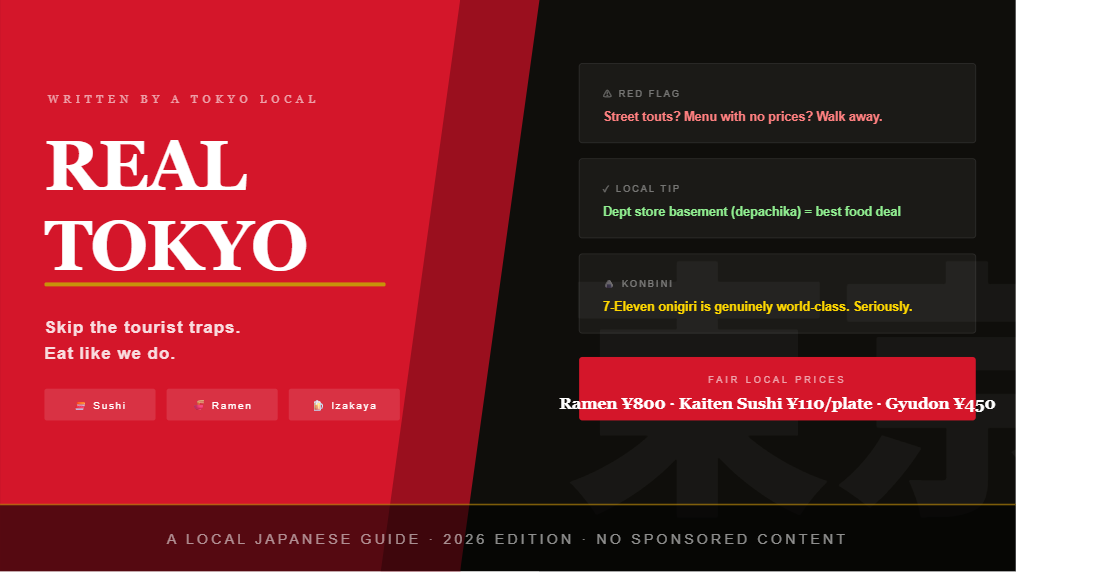
Stop paying
tourist prices.
Eat like we do.
Every day I watch visitors line up for overpriced seafood bowls near Asakusa, pay ¥3,000 for sushi that tastes like nothing, and miss the actual Tokyo hiding just one street away. This guide is my fix for that.
If someone outside a restaurant is trying to hand you a menu or get you to come in — walk away. That’s never how a good Tokyo restaurant works.
Tourist traps we’re embarrassed about
I’ll be honest: some areas around Tokyo’s famous spots have developed a culture of overcharging foreigners who don’t know local prices. It’s not all restaurants — but you need to know the warning signs.
Menu with no prices shown. Every honest restaurant displays prices. No prices = expect a shock. Street touts. Someone standing outside handing out flyers and saying “hello, come in, very good!” — this is illegal in Japan and a major warning sign. English menus ONLY. Fine if it exists alongside Japanese, but if there’s no Japanese menu at all, locals don’t eat there. Photos of seafood bowls near Asakusa/Shibuya priced over ¥3,000. A fair seafood bowl in Tokyo is ¥1,200–¥1,800. Anything more is tourist pricing.
| Food | Fair local price | Tourist trap price | Verdict |
|---|---|---|---|
| Ramen (full bowl) | ¥800–¥1,200 | ¥1,800–¥2,500 | Red flag if over ¥1,400 |
| Kaiten (conveyor) sushi per plate | ¥100–¥220 | ¥500–¥1,000/plate | Walk out |
| Seafood bowl (kaisendon) | ¥1,200–¥1,800 | ¥3,000–¥5,000+ | Overpriced near Asakusa |
| Izakaya beer + food (per person) | ¥2,000–¥3,500 | ¥6,000–¥10,000 | Check menu before sitting |
| Tempura teishoku (set meal) | ¥900–¥1,400 | ¥2,500–¥4,000 | Fine in dept store basement |
| Convenience store onigiri | ¥120–¥180 | — | Honestly great. Not a joke. |
Where locals actually eat
Here’s where I personally go, and where I take friends visiting from abroad. No fluff, no paid placement.
This is the biggest secret I can give you. The basement food floors (depachika) of department stores like Isetan in Shinjuku, Mitsukoshi in Ginza, or Takashimaya in Nihonbashi are absolute food paradise. You’ll find world-class sushi, freshly made bento boxes, incredible pastries, tempura, wagashi sweets — all made by some of Tokyo’s best restaurants, sold at fair prices. Around 5:30–6:30 PM, many items go on sale (up to 50% off) as the day ends. This is not tourist food — this is where Tokyo office workers eat.
The ramen ticket vending machine (券売機) outside the door is a sign of an honest, no-nonsense shop. You pick your bowl, pay the machine, hand the ticket to the chef. No awkward language barrier, fair prices shown up front, and the food is usually excellent. Look for shops with a line of Japanese salarymen at lunchtime — that’s your quality indicator. Ichiran (solo booths, English-friendly), Fuunji in Shinjuku (legendary tsukemen), and local neighbourhood shops in Shimokitazawa or Koenji are all solid bets.
Real talk: most Japanese people don’t eat at high-end sushi restaurants very often. We eat Sushiro, Kura Sushi, or Hamazushi — kaiten sushi chains where plates start at ¥110. The fish is fresher than you’d expect, the selection is massive, and there’s no pressure. Some locations have English tablet ordering. This is genuinely what a typical Tokyo family does on a Saturday. Don’t let anyone make you feel like it’s “lesser” sushi — it’s delicious, it’s local, and you won’t spend ¥20,000 per person.
If you only do one thing in Tokyo, go to a proper izakaya. It’s part restaurant, part bar — you order small plates, drink beer or highballs, and share everything. The atmosphere is casual, loud, and alive. Shinjuku’s Omoide Yokocho (“Memory Lane”) is smoky and cramped and perfect for yakitori. Golden Gai is a maze of tiny 6-seat bars with incredible character. Yurakucho under the train tracks has been an izakaya district since the 1950s — sit outside, drink beer, watch trains go over your head. Aim for a place where you can see actual Japanese people eating inside before you enter.
These beef bowl (gyudon) chains are genuinely beloved by locals, not just a budget fallback. A bowl of tender simmered beef over rice costs around ¥450–¥600. Open 24 hours. You can eat in 10 minutes. Add a raw egg on top (tamago) for ¥70 extra. Yoshinoya is the original, founded in Tokyo in 1899. This is real Japanese food culture — fast, cheap, incredibly satisfying.
Monjayaki is Tokyo’s answer to Osaka’s okonomiyaki — a savory runny pancake you cook yourself on a tabletop griddle. Tsukishima island has an entire street dedicated to it. Nobody talks about this place enough. It’s a 10-minute ride from Ginza, genuinely local, and one of the most unique food experiences in the city. You’ll share a small griddle at your table, stir the batter, and scrape up the crispy edges. Order seafood or kimchi monja. Budget ¥1,200–¥1,800 per person.
7-Eleven is not a joke. We eat here all the time.
I know this sounds wild, but Japanese convenience stores (konbini) — 7-Eleven, Lawson, FamilyMart — are genuinely one of the best food experiences in the country. This is not an exaggeration.
“A ¥160 onigiri from 7-Eleven in Tokyo is better than an expensive rice ball at most tourist restaurants. This is not a hot take. This is just true.“
What to get at a Japanese convenience store:
The best are at 7-Eleven. Tuna mayo, salmon, pickled plum, mentaiko (spicy cod roe). The seaweed wrapper is in a separate compartment to stay crispy. There’s a diagram on the package showing you how to open it — follow the numbers 1, 2, 3. Around ¥130–¥180 each.
Karaage (fried chicken), nikuman (pork bun), corn dogs, oden in winter (fish cake stew). You point and they’ll bag it for you. This is what we eat at 11pm on the way home. Seriously good.
Lawson’s famous cream puffs (シュークリーム), 7-Eleven’s parfaits, FamilyMart’s chocolate cake. Japanese konbini sweets are genuinely world-class. Pastry chefs from top bakeries consult on these products.
Neighbourhoods worth actually exploring
Beyond Shibuya crossing and Senso-ji (which are both great, to be clear), here are the areas where Tokyo’s real character lives.
Tokyo’s bohemian heart. Vintage clothing shops, tiny live music venues, cheap izakayas, independent cafés. Zero tourists. This is where young creative Tokyoites actually spend their weekends.
Old Shitamachi (downtown) Tokyo that survived the war. Narrow streets, old temples, small family shops selling sembei and mochi. What Tokyo looked like 60 years ago. Beautiful and calm.
Under the train tracks between Yurakucho and Hibiya stations is a row of tiny izakayas that has existed since the 1950s. Order beer and yakitori outdoors as trains rumble overhead.
Alternative, slightly anarchic, deeply cool. Secondhand shops, punk bars, old kissaten (coffee shops), cheap curry restaurants. Far from the tourist bubble.
Former geisha district with narrow stone alleyways (横丁, yokocho) hidden behind the main street. Excellent French and Japanese restaurants. Feels like you’ve stepped into 1920s Tokyo.
Island district on the water, famous for monjayaki. Local, quiet, and only 10 minutes from Ginza. The monjayaki street (もんじゃストリート) has been here since the 1970s.
Quick rules that actually matter
Tokyo is extremely easy to navigate if you know a few basic things. Nobody will shout at you for making mistakes — but these will make your experience much better.
Google Maps works perfectly for Tokyo transit. Set your destination, tap “Directions,” then choose the train option. It gives you platform numbers, which exit to take, and exact times. Use it for everything. You don’t need a tour guide to navigate the train system.
Things to do that aren’t in every listicle
A neighborhood public bath (sento) is one of the most genuinely local experiences left in Tokyo. You pay around ¥520, grab a tiny towel, and soak in large communal baths alongside ordinary Tokyo residents after work. Komorebi-yu in Sangenjaya and Thermae-Yu in Shinjuku are both foreigner-friendly and beautiful. Tattoos are generally not allowed — check in advance.
Golden Gai is a maze of around 200 tiny bars, each fitting only 5–8 people, tucked into six narrow alleys in Shinjuku. Each bar has its own theme — jazz records, horror movies, punk music, cat figurines. Some charge a ¥500–¥1,000 cover; many don’t. It’s a little touristy now but still genuinely magical at night. Go after 9pm, wander slowly, and just pick a bar that looks interesting.
The street-level shops in Akihabara are fine, but the real stuff is upstairs. Electronics, vintage manga, retro games, figures — most shops go 5–6 floors up. Yodobashi Camera is the best electronics megastore on earth. Super Potato has vintage games. The Radio Kaikan building is floors of figures, doujinshi, and models. Skip the maid cafes on the ground floor unless you’re genuinely curious.
Yes, it’s a tourist spot. But Tokyo’s skyline is genuinely breathtaking and worth seeing from above at least once. The trick: book the first slot of the day (usually 8am) online in advance. Fewer crowds, golden morning light, and you can often see Mt. Fuji clearly in winter and spring. Don’t go at sunset on a weekend — it’s mobbed. Also: the view from the free Tokyo Metropolitan Government Building in Shinjuku is excellent and completely free.